01
PhD Candidate TU Delft
Yongcheng Huang.
黄永橙
Making AI for code more dependable.
I study how language models and coding agents can understand, improve, and refactor software. Currently at FUSE Lab · TU Delft.
01 Read the code
def f(x):
return sum(x) / len(x)Recover intent
02 Make intent explicit
def mean(values):
return sum(values) / len(values)About
Software. Intelligence.
A little curiosity.
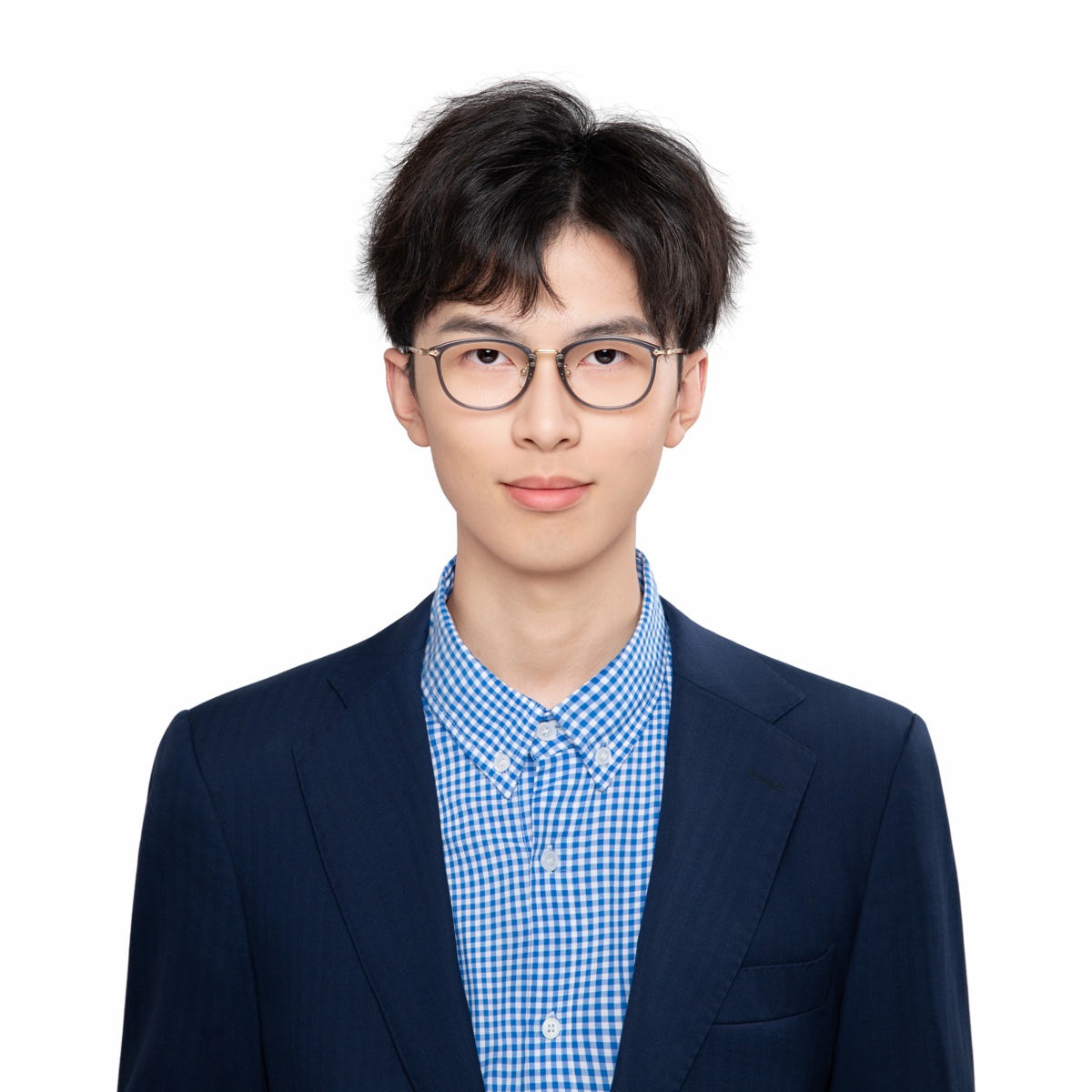
Yongcheng Huang 黄永橙
PhD Candidate · TU DelftI am a PhD candidate in the FUSE Lab and Software Engineering Research Group (SERG) at Delft University of Technology. My work asks how language models and coding agents can make software refactoring more autonomous, verifiable, and useful to developers.
2
Peer-reviewed papers
2
TU Delft theses
03
FUSE Lab track
2026 — now
PhD Candidate
TU Delft · FUSE Lab & SERGAutomated code refactoring and coding agents
2024 — 2026
MSc Computer Science
TU DelftThesis: CoReFusion
2021 — 2024
BSc Computer Science & Engineering
TU DelftResearch
From understanding code
to improving it.
My research connects generative models with real software maintenance tasks. I focus on refactoring quality, evaluation, and keeping developers in control.
Automated Code Refactoring
Coding Agents
AI-enabled Software Engineering
LLMs for Code
Diffusion Language Models
Selected research
Five projects. Interactive perspectives.
MSc Thesis
CoReFusion
Refactoring as Denoising?
Workshop
NTIRE@CVPR 2025
Team TUDelft Dfusion
Publication
Multilingual Code Comments
LLM Error Taxonomy Study
BSc Thesis
LLM of Babel
Multilingual Code Evaluation
Honor Program
Language Coverage
Grammar-Based LLM Analysis
Publications
Publications & theses.
Peer-reviewed publications
02Theses
02CoReFusion: Refactoring Identifier Names with Diffusion Large Language Models
TU Delft repositoryLLM of Babel: Evaluation of LLMs on Code for Non-English Use-cases
TU Delft repositoryAcademic service
A shared pursuit.
Projects
Beyond the papers.
Alpha-built
A lightweight, collaborative architecture-design platform with Git-inspired version control for distributed teams.
LPCV2023
An efficient semantic-segmentation system built for a Jetson Nano under a five-watt power budget.
Green LLAMA
A tool for measuring the energy footprint of language-model workloads across CPU, GPU, and memory usage.
Contact
Let’s make software work better.
For research conversations, collaborations, or seminar ideas, email is the most direct route.